
Choosing a quartz countertop is an exciting part of designing a kitchen or bathroom. But the countertop does not stand alone. Its colour, pattern, and finish need to work with your cabinets, backsplash, and flooring to create a space that feels balanced and welcoming.
You might love a bright white quartz with grey veins, but will it suit warm wooden cabinets? Would a bold countertop look better with a simple backsplash? And how do you stop the floor, cabinets, and worktop from competing for attention?
The secret is to think about the room as one complete design rather than choosing every surface separately. You do not need every finish to match exactly. In fact, a little contrast often makes a kitchen more interesting.
This guide explains how to coordinate quartz with your cabinets, backsplash, and flooring, with practical tips to help you make confident design decisions.
Start with the Overall Look You Want
Before selecting individual colours, decide how you want the finished room to feel. This gives you a clear direction and makes it easier to compare samples.
- Bright and airy: Choose light quartz, soft cabinet colours, and flooring that does not make the room feel heavy.
- Warm and natural: Combine cream or beige quartz with wood cabinets and earthy flooring tones.
- Modern and dramatic: Consider darker quartz, clean cabinet lines, and a controlled mix of contrasting finishes.
- Classic and timeless: Look at white or softly veined quartz with neutral cabinets and simple tile choices.
Save a few examples of kitchens you like. Notice which colours appear more than once and which surfaces provide contrast. This will help you avoid buying materials that look attractive individually but do not work together.
1. Match Quartz Countertops with Your Cabinets
Cabinets usually cover a large part of the kitchen, so their colour has a strong effect on how your quartz countertop looks. The goal is to create a pleasing relationship between the two surfaces.
White Quartz with White Cabinets
White quartz and white cabinets can make a kitchen feel open, clean, and spacious. To stop the design from looking flat, choose a quartz with subtle veining or a slightly different undertone from the cabinets.
For example, a white countertop with gentle grey veins can add detail to plain white cabinetry. You can also introduce warmth through wood flooring, brass or black hardware, or a textured backsplash.
White or Light Quartz with Dark Cabinets
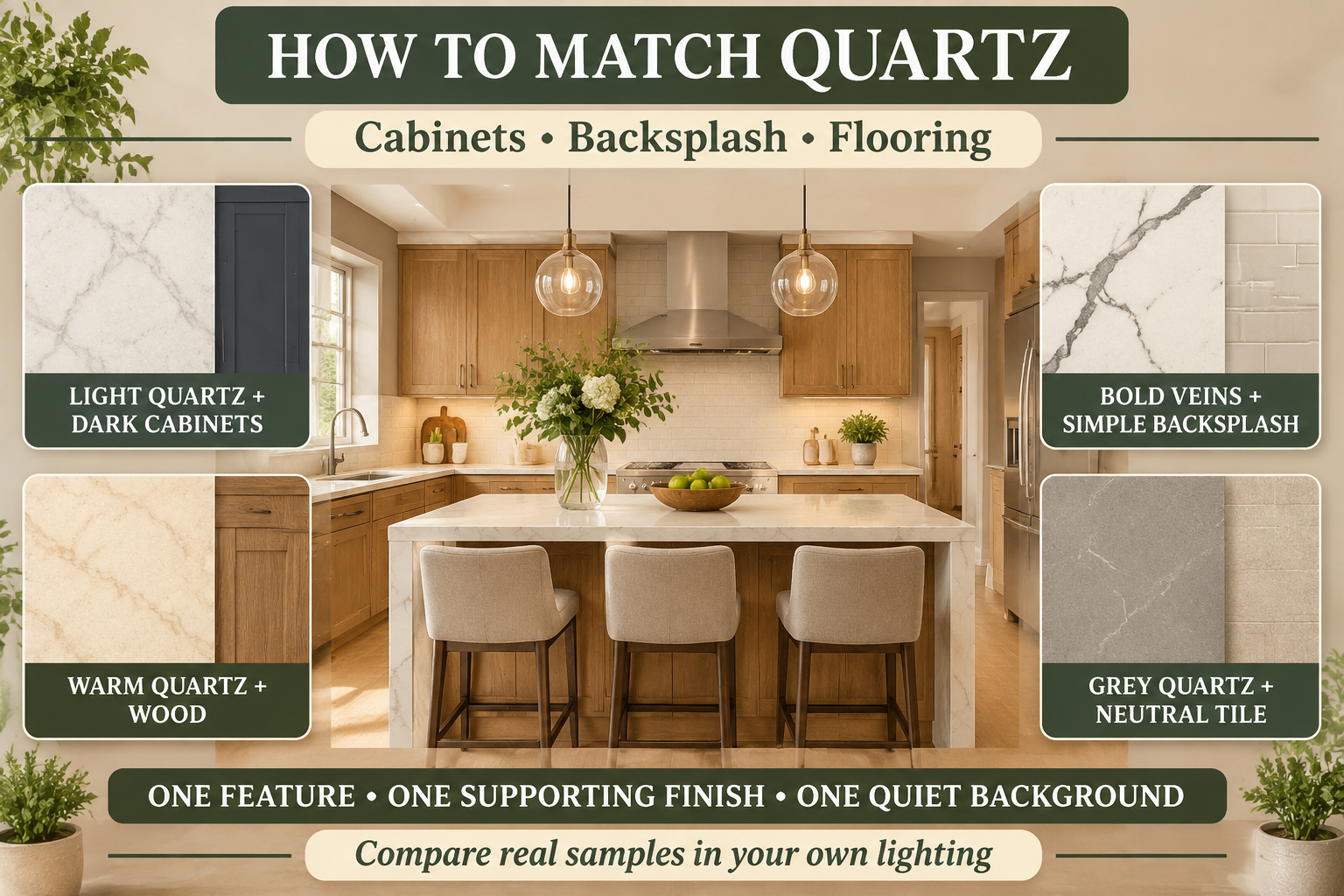
Light quartz works particularly well with navy, charcoal, dark green, or espresso-coloured cabinets. The contrast keeps the room from feeling too dark and gives the countertop a clear visual presence.
If your cabinets have a strong colour, consider a simple quartz pattern. A quiet surface can balance the deeper cabinet shade without making the kitchen feel busy.
Beige and Cream Quartz with Wooden Cabinets
Natural wood cabinets often have warm undertones. Cream, beige, or softly patterned quartz can complement these tones and create a comfortable, natural look.
Pay attention to the wood colour. Honey oak, walnut, and reddish wood finishes each have different undertones. Take a cabinet sample with you when comparing quartz so you can see whether the colours feel harmonious.
Grey Quartz with Coloured Cabinets
Grey quartz can be a flexible choice for kitchens with blue, green, white, or wood cabinets. Light grey often gives a softer appearance, while charcoal grey creates a stronger contrast.
Check whether the grey has warm or cool undertones. A cool grey may look out of place beside very warm wood, while a warmer grey can help connect the two finishes.
2. Coordinate the Quartz with Your Backsplash
The backsplash sits close to the countertop, which means the two surfaces will always be seen together. They should complement each other, but they do not have to use the same pattern or colour.
Keep the Backsplash Simple When the Quartz Has Bold Veining
If your quartz has dramatic veins, movement, or several colours, a plain backsplash is often the easiest way to create balance. White, cream, or a soft neutral tile can allow the countertop to remain the main feature.
Using another strong pattern directly behind a busy countertop can make the kitchen feel crowded. If you love patterned tiles, choose a design with a quieter colour palette.
Add Texture with a Plain Quartz Countertop
A simple quartz surface gives you more freedom to experiment with the backsplash. Subway tiles, handmade-look ceramic tiles, or subtle geometric patterns can add character without overwhelming the room.
You can also use a backsplash with a slightly different finish, such as glossy tiles against a matte countertop, to introduce visual interest.
Consider a Matching Quartz Backsplash
Some homeowners prefer to continue the countertop material up the wall. A matching quartz backsplash creates a clean, continuous appearance and reduces the number of materials in the design.
This approach can work especially well with modern kitchens and quartz that has an attractive but not overly busy pattern. Confirm the installation details, seams, and wall suitability with your fabricator before choosing this option.
3. Choose Flooring That Complements Your Quartz
Flooring covers a large area and can influence the overall warmth and brightness of a kitchen. It should support the countertop and cabinetry rather than compete with them.
Light Quartz with Light Flooring
Pairing light quartz with light flooring can make a small kitchen feel more open. To keep the room from looking too plain, introduce variation through texture, cabinet colour, handles, or lighting.
For example, white quartz can work with pale oak-look flooring and soft grey or cream cabinets for a calm, relaxed appearance.
Light Quartz with Dark Flooring
Dark flooring creates contrast beneath a light countertop. This can give the room more definition, especially when paired with medium or dark cabinets.
To keep the design balanced, repeat one or two darker details elsewhere, such as cabinet handles, light fittings, or bar stools. You do not need to make every element dark.
Warm Quartz with Wood-Look Flooring
Beige and cream quartz often look natural beside wood-look flooring. The key is to check the undertones. If the floor has a strong orange or red tone, a very cool grey countertop may feel disconnected.
Try to compare the materials in the same lighting before making a final choice. Even two samples that look similar in a showroom can appear different at home.
Grey Quartz with Neutral Tiles
Grey quartz can pair well with concrete-look tiles, soft beige flooring, or neutral stone-effect surfaces. Choose a floor pattern that is less prominent than the countertop if the quartz already has noticeable movement.
4. Understand Warm and Cool Undertones
One of the most common design mistakes is matching colours by their names alone. Two materials may both be described as white, grey, or beige but still look different because their undertones do not match.
Warm undertones often include hints of yellow, cream, brown, or red. They tend to work naturally with warm wood, beige tiles, and brass details.
Cool undertones often include hints of blue, green, or crisp grey. They can complement cool white cabinets, stainless steel, and cooler grey flooring.
You can mix warm and cool finishes, but it helps to create a connection between them. For example, warm wooden cabinets can work with cool grey quartz if the backsplash or flooring includes a neutral tone that links both sides.
5. Use the Three-Surface Balance Rule
Your cabinets, quartz, and flooring are three of the largest visual elements in the room. A useful approach is to give each one a different role:
- One main feature: Let one surface carry the strongest colour or pattern.
- One supporting finish: Choose a second surface that complements the main feature without copying it.
- One quiet background: Keep the third surface relatively simple so the room feels balanced.
For example, if you choose heavily veined quartz, use simple cabinets and understated flooring. If your cabinets have a bold colour or detailed wood grain, a quieter quartz and neutral floor may be a better combination.
This is not a strict design rule. It is simply a helpful way to prevent too many competing patterns from appearing in one space.
6. Compare Samples in Your Own Space
Never rely only on small online images or showroom lighting. The appearance of quartz, cabinets, tiles, and flooring can change depending on the light, nearby colours, and surrounding finishes.
Before ordering, collect samples of the materials you are considering and place them together. If possible, view them in the actual room at different times of day.
Check the following:
- Do the white shades look similar, or does one appear yellow or blue?
- Does the quartz pattern compete with the backsplash or floor?
- Does the cabinet colour make the countertop look warmer or cooler?
- Do the finishes look balanced in both daylight and artificial light?
- Will the combination still look appealing when larger areas are installed?
Also ask your supplier or fabricator to show you a larger quartz sample or slab where possible. Veining and colour movement can look different across a full countertop than they do on a small sample.
Quartz, Cabinets, Backsplash, and Flooring: Combination Ideas
If you are not sure where to start, the combinations below can help you build a coordinated colour scheme.
| Quartz Style | Cabinet Colours | Backsplash | Flooring | Overall Look |
|---|---|---|---|---|
| White with soft grey veins | White, navy, or charcoal | Plain white or light grey tile | Light oak or neutral grey | Clean and contemporary |
| Warm beige quartz | Natural oak or cream | Ivory or textured beige tile | Warm wood-look tile | Soft and welcoming |
| Solid light grey quartz | White, blue, or sage green | White subway tile | Concrete-look or pale stone tile | Modern and understated |
| Dark charcoal quartz | White, light wood, or grey | Simple white or matching dark tile | Medium wood or light neutral tile | Bold and dramatic |
| White quartz with subtle warm movement | Walnut or greige | Warm white ceramic tile | Natural beige or brown tones | Balanced and timeless |
Use these combinations as starting points rather than fixed formulas. The exact result will depend on the undertones, patterns, lighting, and finish of the materials you select.
Common Mistakes to Avoid When Matching Quartz
A few small decisions can make a big difference to the finished room. Watch out for these common mistakes:
1. Choosing Every Material Separately
Selecting cabinets, quartz, backsplash, and flooring at different times without comparing them can lead to mismatched undertones. Keep all your samples together before making final decisions.
2. Using Too Many Bold Patterns
Veined quartz, patterned backsplash tiles, and heavily marked flooring can compete for attention. Choose one main pattern and let the other surfaces provide balance.
3. Ignoring the Lighting
A countertop that looks bright white in a showroom may appear warmer or darker in your kitchen. Review samples under the lighting conditions in which the room will be used.
4. Matching Everything Too Closely
Using exactly the same colour across every surface can make a room feel flat. Gentle contrast in tone or texture can give the design more depth.
5. Forgetting Practical Requirements
Appearance matters, but your choices should also suit daily use. Consider cleaning, maintenance, slip resistance for flooring, and the care instructions for each material. Ask suppliers for product-specific guidance.
Final Thoughts: Create a Balanced Look with Quartz
Matching quartz with your cabinets, backsplash, and flooring is easier when you plan the room as a complete design. Start with the overall style you want, pay attention to warm and cool undertones, and decide which surface should be the main feature.
Light quartz can brighten darker cabinets, warm quartz can complement natural wood, and a simple backsplash can balance a countertop with bold veining. Your flooring should support the colour scheme and help connect the different finishes.
Most importantly, compare real samples together before placing an order. Look at them in your own space, consider the lighting, and make sure the materials work both visually and practically.
The best combination is not the one where everything matches perfectly. It is the one where each surface complements the others and the whole room feels comfortable, cohesive, and suited to your style.
Frequently Asked Questions (FAQs)
What colour quartz goes with most kitchen cabinets?
White, soft grey, and warm beige quartz are versatile options that can work with many cabinet colours. The best choice depends on the cabinet's undertone, the room's lighting, and the overall style you want.
Should the backsplash match the quartz countertop?
No. The backsplash should complement the quartz, but it does not need to match it exactly. A simple backsplash often works well with patterned quartz, while a more decorative tile can add interest when the countertop has a quiet design.
What flooring looks best with white quartz countertops?
White quartz can work with light oak, beige, grey, or darker flooring. Choose a floor tone that complements your cabinets and does not compete with the countertop pattern.
Can I mix warm cabinets with cool grey quartz?
Yes. Warm cabinets and cool grey quartz can work together when another finish, such as the backsplash or flooring, helps connect the different undertones. Always compare physical samples before deciding.
Should kitchen floors be lighter or darker than quartz countertops?
Either can work. Lighter flooring can create a bright, open look, while darker flooring adds contrast and definition. Consider the size of the room, cabinet colour, and amount of natural light.
How do I choose a backsplash for quartz with bold veining?
Choose a backsplash with a simple colour and limited pattern so the countertop remains the main feature. Plain ceramic tiles or a subtle neutral finish are common options.
Can I use the same quartz for the countertop and backsplash?
Yes. Extending quartz from the countertop up the wall can create a continuous, streamlined appearance. Check the installation requirements and suitability of the wall area with your fabricator.
What is the best way to compare quartz and cabinet colours?
Take physical samples of the quartz, cabinet finish, backsplash, and flooring and place them together. Review them in the room's natural and artificial lighting before making a final selection.





Leave A Comment