
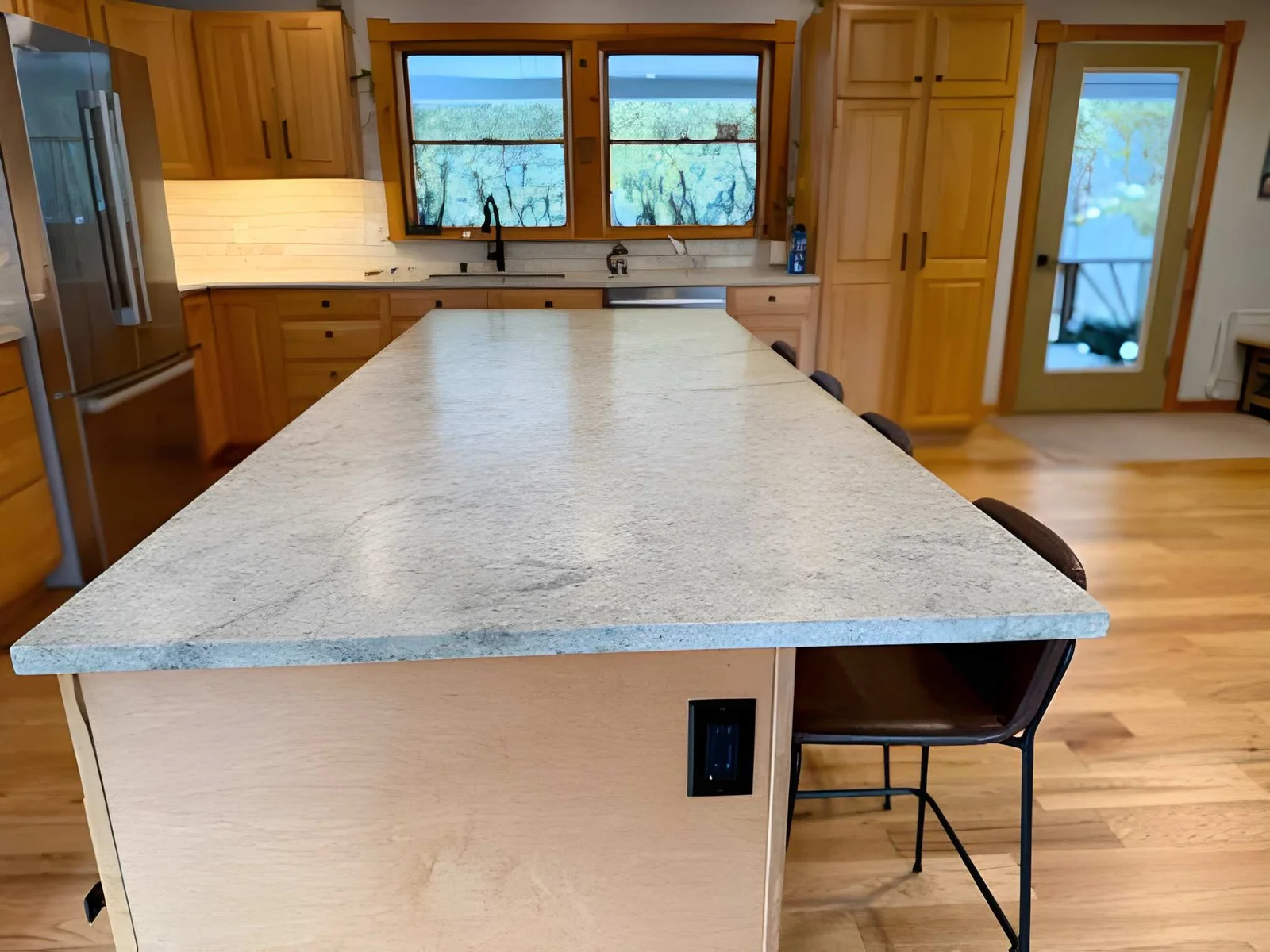
Choosing the right countertop material is an important decision for hotels, restaurants, offices, and other commercial spaces. Unlike residential countertops, commercial surfaces often face heavier daily use, frequent cleaning, spills, and continuous contact with staff, customers, and equipment. The right material should balance durability, appearance, maintenance requirements, and overall project cost.
For architects, interior designers, contractors, and property developers, selecting a suitable countertop material can help improve the functionality and appearance of a commercial space. Quartz stone and solid surface are popular choices, but natural stone, porcelain, and stainless steel may also be suitable depending on the application.
This guide explores the best countertop materials for commercial projects and explains how to choose the right option for different environments.
Why Countertop Material Selection Matters in Commercial Spaces
Commercial countertops are more than decorative surfaces. They support everyday operations and contribute to the overall customer experience.
In hotels, countertops are commonly installed in reception areas, guest bathrooms, restaurants, bars, and service counters. Restaurants require surfaces that can handle frequent cleaning, food preparation activities, and repeated daily use. Offices and retail spaces need countertops that maintain a professional appearance while supporting regular business activities.
Before choosing a material, consider these important factors:
- Durability: The surface should withstand the expected level of daily use.
- maintenance: Cleaning and routine care should fit the property’s maintenance schedule.
- Appearance: Colors, patterns, and finishes should complement the interior design.
- Installation: Slab dimensions, seams, edges, and installation requirements can affect the final result.
- Budget: Consider the initial purchase price as well as fabrication, installation, and long-term maintenance.
- Application suitability: A reception desk has different requirements from a commercial kitchen worktop.
Understanding these factors makes it easier to compare materials and select the most suitable solution.
1. Quartz Stone: A Practical Choice for High-Traffic Interiors
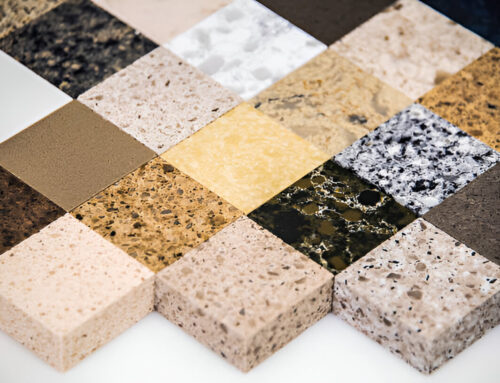
Quartz stone is a popular countertop material for hotels, offices, retail environments, and other commercial interiors. Engineered quartz is generally made using natural quartz minerals combined with resins, pigments, and other ingredients. Its composition varies by manufacturer.
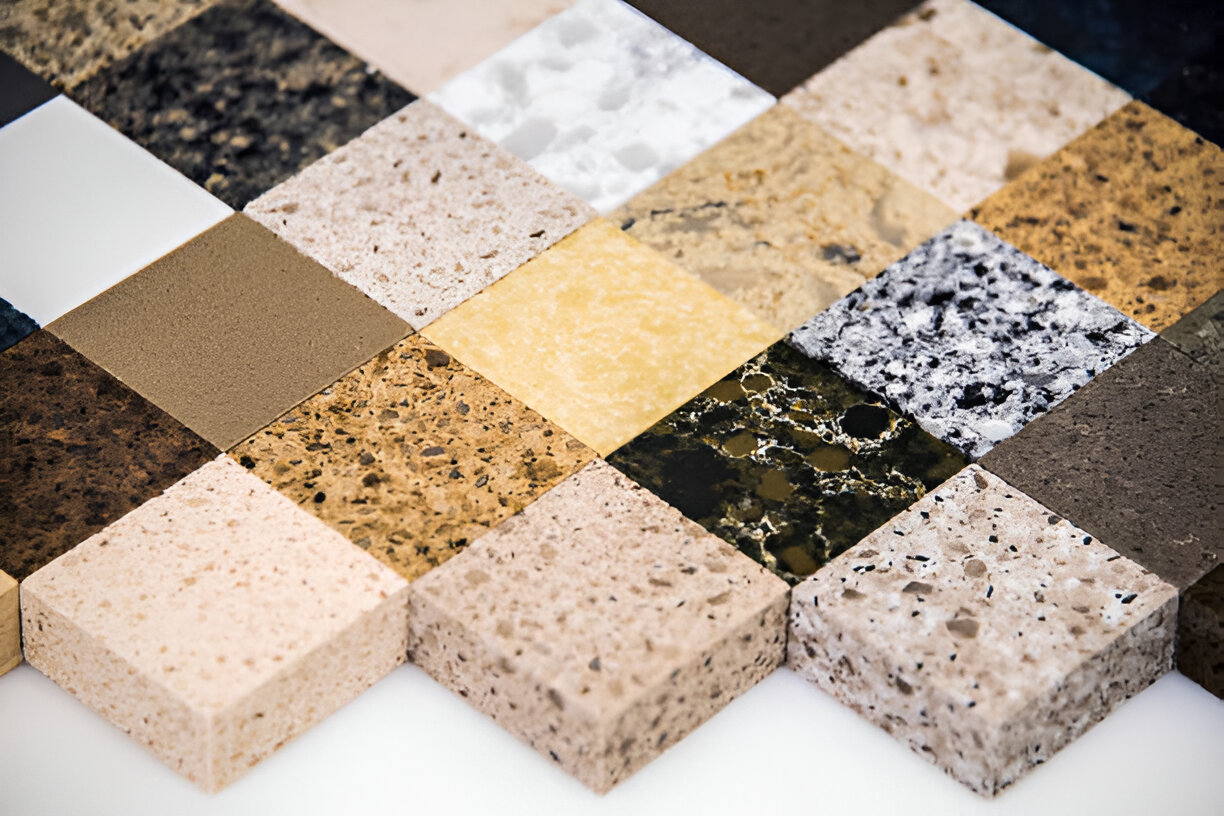
One of its main advantages is its consistent appearance. Commercial projects often require multiple slabs with similar colors and patterns, particularly when a design extends across reception desks, vanity tops, or other prominent surfaces.
Key Benefits of Quartz Countertops
Consistent appearance: Engineered quartz is available in a wide range of colors, patterns, and finishes, making it easier to coordinate different areas within a project.
Low routine maintenance: Many quartz surfaces do not require periodic sealing, although the manufacturer’s care instructions should always be followed.
Everyday durability: Quality quartz surfaces can perform well in suitable interior applications when properly fabricated and maintained.
Design flexibility: Quartz can complement contemporary hotels, office receptions, retail counters, and restaurant interiors.
Where Quartz Works Best
Quartz is particularly suitable for:
- Hotel reception desks and lobby counters
- Guest bathroom vanity tops
- Office reception areas
- Retail display counters
- Restaurant dining and service counters
- Commercial vanity installations
However, quartz is not ideal for every environment. Many engineered quartz products can be damaged by excessive heat, and some resins may discolor under prolonged UV exposure. It is also important to verify the specific product’s suitability for food preparation and the intended commercial application.
For projects where appearance, consistency, and routine maintenance are priorities, quartz is worth considering.
2. Solid Surface: Ideal for Seamless and Custom Designs
Solid surface is another strong option for commercial interiors, especially when the design requires smooth transitions, integrated basins, or custom shapes.
Depending on the product, solid surface materials may be manufactured using acrylic, polyester, or modified acrylic formulations with mineral fillers. Their performance and fabrication properties vary, so the exact product specification matters.
Key Benefits of Solid Surface Countertops
Seamless appearance: Properly fabricated joints can be inconspicuous, helping create a clean and continuous surface.
Custom shapes: Certain solid surface products can be thermoformed into curves and customized designs by trained fabricators.
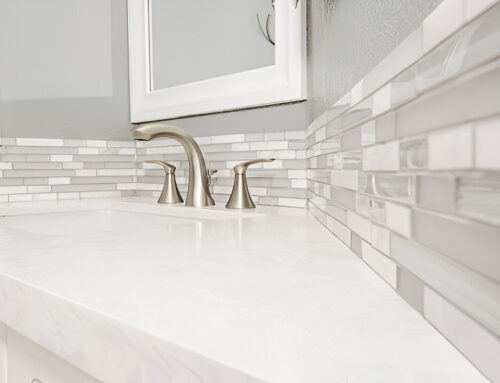
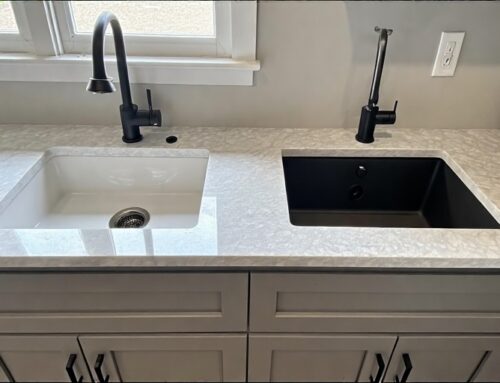
Integrated sinks and basins: Compatible materials can be fabricated with integrated sinks, making them suitable for selected vanity and washroom applications.
Repairability: Some solid surface products can be repaired or refinished to address minor scratches and surface wear, depending on the damage and manufacturer’s recommendations.
Design flexibility: A broad range of colors and fabrication options makes solid surface suitable for modern commercial interiors.
Where Solid Surface Works Best
Solid surface is commonly considered for:
- Hotel bathroom vanities
- Reception desks with curved designs
- Office pantry countertops
- Retail service counters
- Washroom vanity units
- Selected healthcare and laboratory interiors
For healthcare or laboratory projects, confirm the product’s chemical resistance, cleaning compatibility, and relevant performance certifications before specifying it.
Solid surface is especially useful when a project needs a modern, seamless appearance or a customized design that would be difficult to achieve with conventional slab materials.
3. Natural Stone: A Distinctive and Premium Appearance
Natural stone, including granite and marble, offers distinctive patterns formed by natural geological processes. Each slab has its own variations, which can make it attractive for premium hospitality and architectural projects.
Granite and marble should not be treated as interchangeable materials because they have different performance characteristics.
Key Benefits of Natural Stone
Unique patterns: Natural variations create a distinctive appearance that can add character to luxury interiors.
Material variety: Different stones provide a range of colors, veining, textures, and finishes.
Premium design appeal: Natural stone can complement upscale hotel lobbies, bars, feature counters, and selected restaurant interiors.
Long service potential: Suitable stone products can provide many years of service when correctly selected, installed, and maintained.
Important Considerations
Some natural stones require periodic sealing, while others may need more specialized care. Marble is particularly susceptible to etching from acidic substances, including lemon juice and certain cleaning products.
Natural stone can also vary in porosity, strength, and resistance to staining. Buyers should inspect samples or slabs and confirm that the selected material meets the requirements of its intended application.
Natural stone is a good choice when natural variation and visual character are central to the design.
4. Porcelain Slabs: Suitable for Contemporary Commercial Designs
Porcelain slabs are manufactured from refined mineral materials and processed at high temperatures. Large-format porcelain is increasingly considered for modern architectural surfaces, including selected countertops and vanity tops.
Key Benefits of Porcelain
Heat resistance: Many porcelain products offer good heat resistance, although performance depends on the product and installation details.
Stain resistance: Properly manufactured porcelain surfaces generally have low porosity, which can help resist staining.
Design variety: Some products reproduce the appearance of marble, concrete, or other natural materials.
UV stability: Many porcelain surfaces are suitable for applications where color stability under sunlight is important, subject to the manufacturer’s specifications.
Where Porcelain Works Best
Porcelain may be suitable for hotel vanities, reception counters, selected restaurant countertops, and commercial interiors where a slim, contemporary appearance is desired.
However, porcelain slabs can be brittle at exposed edges and require appropriate cutting, handling, support, and installation. Large-format products should be installed by experienced professionals who understand the manufacturer’s requirements.
For projects that prioritize surface performance and modern design, porcelain is a valuable material to evaluate alongside quartz and solid surface.
5. Stainless Steel: A Functional Option for Commercial Kitchens
Stainless steel is widely used in professional kitchens because it offers a practical surface for food service and preparation environments.
Unlike decorative countertop materials, stainless steel is often selected primarily for its operational benefits.
Key Benefits of Stainless Steel
Easy cleaning: A properly designed stainless steel worktop can be cleaned using suitable products and established hygiene procedures.
Heat tolerance: Stainless steel can withstand temperatures that may damage resin-based countertop materials.
Commercial functionality: It is commonly used for preparation tables, workstations, sinks, and food-service equipment.
Moisture resistance: Appropriate stainless steel grades offer good corrosion resistance when properly maintained.
Where Stainless Steel Works Best
Stainless steel is particularly suitable for restaurant kitchens, catering facilities, food preparation stations, and back-of-house service areas.
It can show scratches, fingerprints, and water marks, so the finish and cleaning routine should be considered. The appropriate steel grade and fabrication details also matter in environments exposed to moisture, salt, or cleaning chemicals.
For many restaurants, stainless steel is a practical operational choice, while quartz or solid surface may be better suited to customer-facing counters and decorative interiors.
Countertop Materials Comparison
The following table provides a general comparison. Actual performance depends on the specific product, fabrication quality, installation, and maintenance.
| Material | Main Advantage | Maintenance | Best Applications |
|---|---|---|---|
| Quartz Stone | Consistent patterns and low routine maintenance | Protect from excessive heat | Hotel lobbies, reception desks, vanities |
| Solid Surface | Seamless joints and custom designs | Some minor damage can be repaired | Reception desks, integrated basins |
| Natural Stone | Unique natural patterns | Care depends on the stone type | Luxury lobbies, bars, feature counters |
| Porcelain | Low porosity and varied finishes | Protect edges during handling | Vanities, reception areas |
| Stainless Steel | Practical for commercial kitchens | Regular cleaning; scratches may show | Food preparation stations, kitchen worktops |
How to Choose the Right Countertop for Different Commercial Projects
There is no single countertop material that suits every commercial environment. The best choice depends on how the surface will be used and the priorities of the project.
Hotels and Hospitality Projects
Hotels often combine several countertop applications within the same property. A reception desk may require a premium appearance, while guest bathrooms need surfaces that are easy to maintain.
Quartz can be a suitable option for reception counters and vanity tops where consistent patterns are important. Solid surface may be preferable for curved reception desks or integrated washbasins. Natural stone can be considered for feature areas where its unique appearance adds value.
Restaurants and Cafés
Restaurants need to distinguish between customer-facing areas and operational kitchen worktops.
Quartz may suit decorative service counters and selected dining areas. Solid surface can work well for certain custom counters and integrated designs. Stainless steel is often more appropriate for professional food preparation areas, while porcelain may suit selected applications when the product is properly specified.
For every food-service application, verify the material’s suitability for the intended contact, temperature, cleaning chemicals, and applicable hygiene requirements.
Offices and Corporate Buildings
Office reception desks, meeting areas, and pantry countertops need to balance professional appearance with everyday functionality.
Quartz is worth considering for reception counters and pantry surfaces. Solid surface may be useful when the design includes curved forms or integrated features. The final choice should account for expected usage, cleaning routines, and the overall interior design.
Retail Stores and Showrooms
Retail countertops contribute to the customer experience and may be part of a store’s visual identity.
Quartz offers a broad selection of patterns and finishes, while solid surface can support customized shapes and seamless designs. Material samples should be reviewed under the project’s actual lighting conditions before final approval.
Important Factors to Check Before Ordering Countertops
For large commercial projects, material selection should be supported by proper planning and supplier coordination.
Before placing an order, consider the following checklist:
- Confirm the application: Identify whether the countertop will be used for reception, food preparation, washing, or another purpose.
- Review technical specifications: Check thickness, dimensions, finish, heat resistance, stain resistance, and other relevant properties.
- Approve samples: Review the actual color and pattern before confirming a large order.
- Plan seams and edges: Coordinate slab layouts, cutouts, sink openings, and edge details with the fabricator.
- Verify installation requirements: Confirm substrate support, adhesive compatibility, handling, and installation methods.
- Check cleaning recommendations: Make sure the planned cleaning products are suitable for the selected surface.
- Coordinate delivery schedules: Large projects may require phased deliveries, careful packaging, and consistent product specifications.
- Consider long-term maintenance: Evaluate how the material will perform under the property’s expected operating conditions.
These steps can reduce avoidable delays, improve coordination between contractors, and help ensure that the finished countertops meet project expectations.
Why Work With an Experienced Countertop Manufacturer?
Commercial projects often require more than an attractive material. Buyers may also need consistent product specifications, reliable communication, fabrication guidance, and coordination for larger orders.
An experienced manufacturer can help buyers understand the available materials, compare suitable finishes, review technical information, and plan product requirements before installation begins.
For distributors, contractors, architects, and project developers, confirming slab availability, dimensions, quality requirements, packaging, and delivery arrangements early in the process can make procurement easier.
At Opaly Quartz, buyers can explore quartz stone and solid surface solutions for a range of interior applications. Reviewing the available products and technical information can help project teams identify suitable materials for their design and operational needs.
Final Thoughts
The best countertop material for a hotel, restaurant, or commercial project depends on the intended application, design goals, maintenance requirements, and budget.
Quartz stone is a strong candidate for many reception counters, vanities, and decorative commercial interiors. Solid surface is particularly useful for seamless joints, integrated basins, and customized shapes. Natural stone offers distinctive patterns, porcelain provides additional options for contemporary designs, and stainless steel remains a practical choice for many professional kitchen environments.
Rather than selecting a material based on appearance alone, compare its technical specifications, installation requirements, and expected performance in the actual environment.
Looking for countertop materials for your next commercial project? Explore Opaly Quartz to learn more about quartz stone and solid surface options for hospitality, retail, office, and interior design applications.



Leave A Comment